Enabling Digitalization in the Musahar Community: From Connectivity to Community Ownership
.png)
On 30 May 2026 beneath a thatched roof in Bhangaha Municipality Ward No. 9 Mahottari a few hundred people gathered for a moment that marked the beginning of something bigger than a technology project.
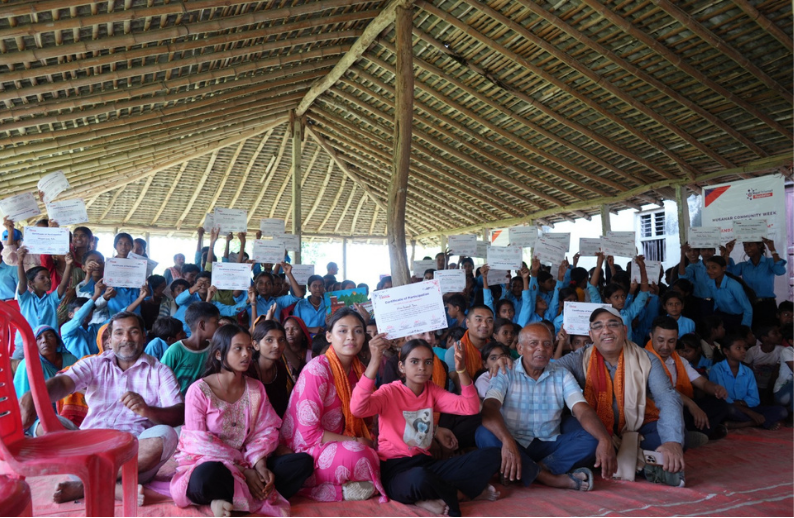
Students in blue uniforms held certificates above their heads. Parents teachers community leaders and local representatives sat together. Cameras captured the moment though getting everyone to look in the same direction proved surprisingly difficult.
It was the kind of ordinary imperfect moment that becomes meaningful only later.
That day marked the formal handover of the “Enabling Digitalization in the Musahar Community” project implemented by the Nepal Internet Foundation (NIF) with support from the APNIC Foundation. After nearly a year of planning infrastructure development training and community engagement the computers Internet connectivity solar power systems technical knowledge and supporting documentation were formally handed over to the community.
The project was no longer simply something implemented by an organization.
It belonged to the community.
And that was always the point.
Where the Journey Began
Digital access is no longer a luxury. It is increasingly connected to how people learn communicate access public services manage finances find information and explore economic opportunities.
Yet access to technology remains deeply unequal.
For the Musahar community in Bhangaha Municipality Ward No. 9 digital exclusion was closely connected to existing social and economic challenges. Many students had limited opportunities to use computers. Teachers had few digital resources to support classroom learning. Internet connectivity was unreliable and community members had limited exposure to digital services and online opportunities.
The two schools selected for the project were:
Shree Kishori Janata Secondary School
Shree Sabari Dalit Basic School
When the project began both schools had only limited ICT facilities. Existing computers were old or non-functional Internet connectivity was unreliable and there was no dependable power backup system. More importantly there was limited local capacity to maintain and troubleshoot ICT infrastructure once it was installed.
This shaped the project’s approach.
The objective was not simply to provide equipment. It was to create an ecosystem where infrastructure skills local ownership and long-term sustainability could work together.
As we often say one project cannot undo years of exclusion. But it can help create the conditions for a different future: reliable infrastructure practical skills and local people capable of keeping that infrastructure working.
Building More than Computer Labs
At the heart of the project were two fully equipped ICT hubs one in each beneficiary school.
The hubs included:
15 desktop computers
2 smart boards
2 multifunction printers
2 routers and 2 switches
8 Wi-Fi access points
Structured LAN cabling and network racks
Outdoor Wi-Fi coverage
Solar panels batteries and inverter-based power backup
The infrastructure was designed with the realities of the community in mind.
A computer lab is only useful when the computers can operate. Internet access is only meaningful when it is reliable. And digital infrastructure cannot be considered sustainable if it stops functioning as soon as the implementing team leaves.
.png)
Bringing Fiber to the Schools
Reliable Internet connectivity was therefore one of the most important components of the project.
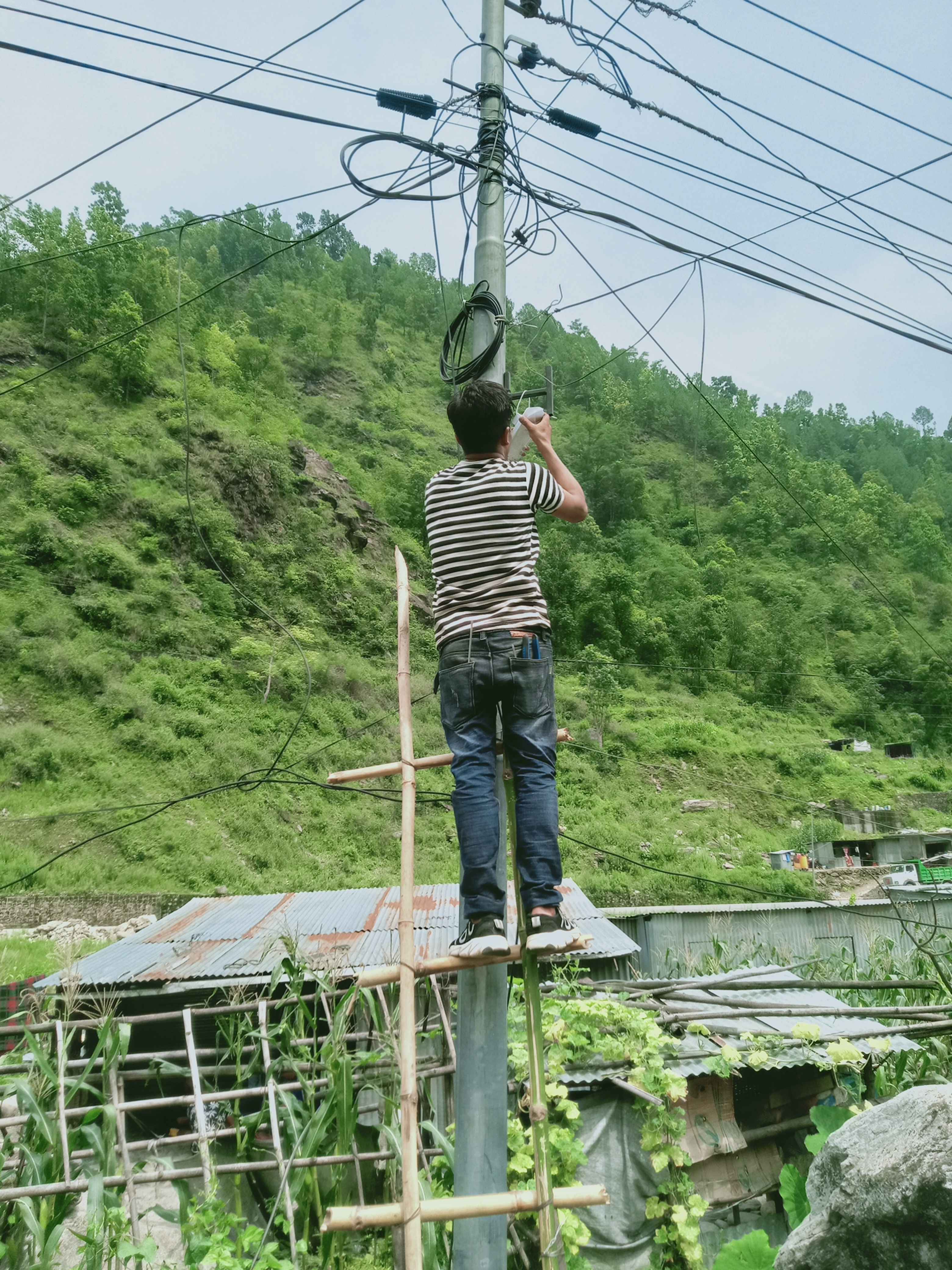
With support from Subisu Cablenet and Fiberworld Communication fiber-optic Internet connectivity was extended to both schools. The newly established connection reached speeds of up to 200 Mbps providing the schools and surrounding community with a level of connectivity that had previously been difficult to access.
For students this meant being able to access online learning resources.
For teachers it created opportunities to incorporate digital materials into classroom teaching.
For the wider community it opened the door to digital services information communication and new forms of economic participation.
Keeping the Lights and Internet On
Connectivity without reliable electricity presents another challenge.
To address this solar power systems batteries and inverters were installed at both schools. The systems provide backup power so that computers networking equipment and Internet connectivity can continue operating when the grid supply is interrupted. Electrical installations were also completed with appropriate safety measures.
These may not be the most visible parts of a digital inclusion project but they are among the elements that determine whether the infrastructure remains useful over time.
Seven Days of Community Engagement
Musahar Community Week 2026
Technology can be installed in a day.
Digital confidence cannot.
That is why the project placed strong emphasis on community engagement and capacity building. From 25 to 31 May 2026 the project organized Musahar Community Week 2026 seven days of training awareness creativity technical learning inclusion and community activities.
The week was designed around a simple principle: Digital inclusion is not only about providing access; it is about enabling people to use that access meaningfully.
Day 1: Building Community Ownership
The first day focused on coordination and preparation.
The project team traveled from Kathmandu to Bhangaha and worked with the two schools local government representatives ward officials teachers and community leaders to finalize venues schedules and activities.
This initial engagement was essential. Digital inclusion works best when local institutions and communities are involved from the beginning rather than being invited only at the end.
Day 2: Empowering Girls and Exploring Digital Entrepreneurship
The second day combined social inclusion with economic opportunity.
The Selfie with Daughter Campaign encouraged families to celebrate the importance of girls’ education and equal opportunities. It created a simple but meaningful space for parents students and community members to engage in conversations around gender equality.
The afternoon focused on Geographical Indication (GI) products and online marketing. Participants were introduced to the concept of GI products and explored how digital platforms and e-commerce could help promote and market locally produced goods.
For many participants it was an introduction to the idea that the Internet could be more than a place for communication it could also become a platform for entrepreneurship and livelihood development.
Day 3: Creating Local Technical Capacity
One of the most important days of the week was dedicated to technical training.
Twenty-five young people from the community participated in hands-on sessions covering basic networking cable preparation troubleshooting Wi-Fi connectivity equipment handling inverter operation battery safety and other practical aspects of ICT infrastructure maintenance.
The objective was straightforward: when something goes wrong the community should not always have to wait for technical support from Kathmandu.
Training local youth created the foundation for a community-based support system around the new infrastructure.
Day 4: Building a Safer Digital Community
As more people gain access to the Internet digital safety becomes equally important.
The cybersecurity awareness session focused on practical issues that people encounter every day creating stronger passwords protecting OTPs recognizing scams and fraudulent messages using social media responsibly and protecting children online.
The day also included the “Ek Abhiyan” Art Competition where more than 50 students participated around the theme “My Community My Future.”
The competition created a space for young people to express how they see their community and the future they want to build.
Day 5: Making Digital Finance More Accessible
Digital financial services can create opportunities but only when people understand how to use them safely.
More than 35+ participants took part in a digital financial literacy session covering mobile banking digital wallets QR payments budgeting and fraud prevention.
Rather than treating digital finance as a technical concept the session focused on practical everyday use helping participants understand how digital payments work and how to protect themselves from common financial risks.
The day also included the distribution of school bags and learning materials to more than 85 children of Shree Sabari Dalit Basic School with support from the APNIC Foundation and Lions Club.
.png)
The Day the Infrastructure Became the Community's
Then came the handover.
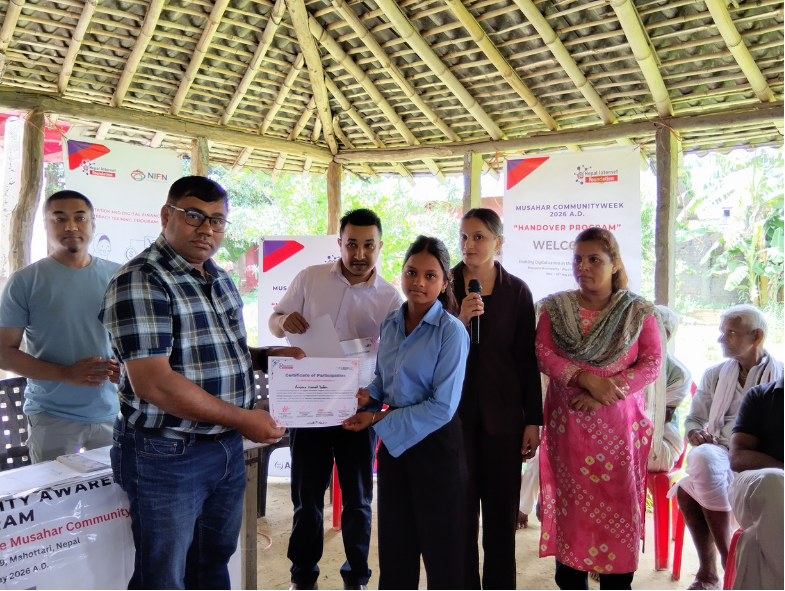
On 30 May 2026 the project formally transferred the ICT infrastructure and related assets to the two beneficiary schools. This included computers smart boards networking infrastructure solar power systems and supporting documentation.
A seven-member Management Committee consisting of teachers parents and community representatives was established to oversee the ICT hubs.
Training certificates were also distributed to participants who had completed the various sessions during Community Week.
But the real significance of the day went beyond the ceremony.
The handover represented a transition from project implementation to community ownership.
Listening Before Leaving
The final day was dedicated to something equally important: listening.
Students teachers and parents were invited to share what they found useful what could have been improved and what they would like to see in the future.
For a project designed around community needs feedback is not an administrative formality. It is part of the learning process.
The project team documented the feedback before concluding the field activities and returning to Kathmandu.
What the Project Taught Us
Every community project leaves lessons behind.
Some are planned.
Others emerge only through experience.
Infrastructure Alone Is Not Digital Inclusion
A computer sitting unused does not create digital empowerment.
A smart board that teachers do not know how to operate remains an expensive piece of equipment.
The project reinforced an important principle: Training is not an additional component of digital infrastructure it is part of the infrastructure itself.
People need the skills and confidence to turn technology into something useful.
Ownership Goes Beyond a Handover Ceremony
A signed handover document is important but genuine ownership is demonstrated through local capacity.
The 25 young people trained in technical maintenance together with the seven-member Management Committee created a local support structure around the ICT hubs.
The goal was not to create permanent dependence on an external organization.
The goal was to ensure that the community could increasingly manage its own digital resources.
Digital Learning Must Be Inclusive
The experience also reinforced the importance of language and participation.
When people are able to ask questions in the language they are most comfortable using participation becomes more natural. Similarly creating intentional spaces for women and girls can help address participation gaps that may otherwise remain invisible.
Inclusion does not happen automatically.
It has to be designed into the project from the beginning.
Practical Learning Creates Stronger Engagement
The technical training demonstrated another important lesson: people often remember what they do more than what they are told.
Making cables examining network equipment troubleshooting connectivity and working directly with the infrastructure created a different level of engagement than a traditional presentation.
Hands-on learning made the technology less intimidating—and more understandable.
What Comes Next?
The project may have formally concluded but the ICT hubs remain operational.
Both hubs are intended to serve not only students but also the wider community. The Management Committee will support their operation while Bhangaha Municipality the two schools community representatives Subisu Cablenet and Fiberworld Communication remain part of the broader sustainability network.
The role of NIF now changes.
We will continue to remain connected and provide support when needed but the ultimate measure of success is whether the community can continue moving forward without depending on the project team for every step.
By the Numbers
The project created a foundation for continued digital access and learning:
2 schools equipped with ICT hubs
15 computers
2 smart boards
2 multifunction printers
Internet connectivity of up to 200 Mbps
Solar backup systems at both schools
500+ participants in training and community activities
400+ people reached through digital literacy and online safety sessions
35+ participants in digital financial literacy
25 local youth trained in network and power maintenance
50+ students participating in the art competition
85+ children receiving school bags and learning materials
Beyond the Numbers
Numbers help us understand the scale of a project.
They do not always capture its significance.
A student who used a computer for the first time today may use digital tools to pursue education tomorrow. A young person who learned how to troubleshoot a network may discover a livelihood opportunity through that skill. A teacher who gains confidence using digital resources may bring new learning opportunities into the classroom.
These changes may not appear immediately in project indicators.
But they are part of what meaningful digital inclusion is meant to create: The confidence to explore the skills to participate and the opportunity to imagine something beyond what was previously possible.
A Shared Achievement
No digital inclusion project is achieved by one organization alone.
We extend our sincere appreciation to the APNIC Foundation for supporting the initiative; Subisu Cablenet and Fiberworld Communication for helping extend fiber connectivity to the schools.
We are equally grateful to Bhangaha Municipality and Ward No. 9 for their continued support and coordination.
Most importantly we thank the students teachers parents and community members of Shree Kishori Janata Secondary School and Shree Sabari Dalit Basic School.
They welcomed the project participated in the activities learned alongside the project team and ultimately took ownership of the infrastructure.
That is where the real story of “Enabling Digitalization in the Musahar Community” lies.
It is not simply a story about computers fiber Internet Network infrastructure solar backup systems or smart boards.
It is a story about access becoming opportunity technology becoming knowledge and a project becoming community-owned infrastructure for the future.
And perhaps years from now that photograph beneath the thatched roof with students holding their certificates parents and teachers sitting together and everyone trying to look at the camera will mean even more than it does today.
Because that was the day the infrastructure became theirs.
Project Highlight Video